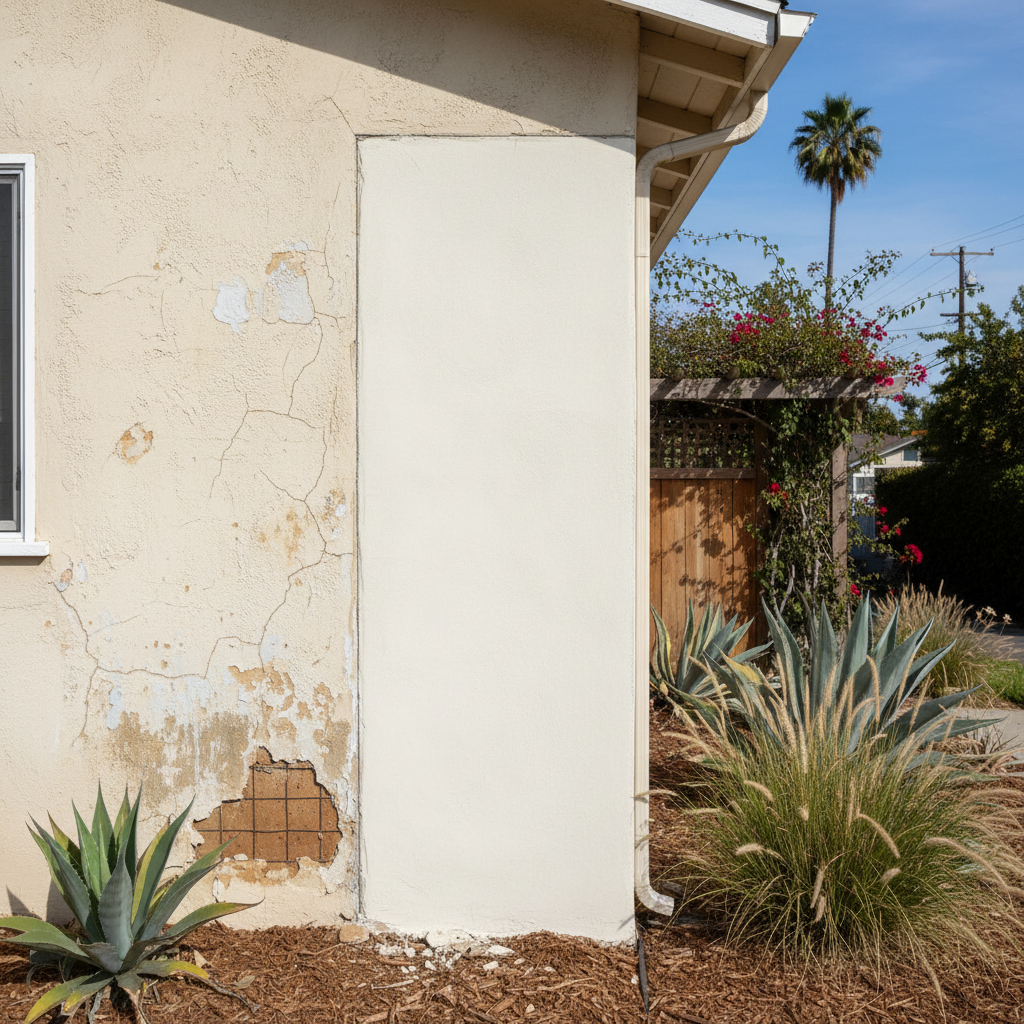
Choosing the right exterior finish for your home comes down to a straightforward choice between traditional three-coat cement stucco and a synthetic acrylic finish. Around neighborhoods from Bluff Heights to Bixby Knolls, you will see plenty of both. Synergy Stucco Long Beach gets asked all the time which option holds up better against the local coastal marine layer and shifting seasonal temperatures. We will break down how they actually compare on cost, durability, maintenance, and appearance so you can make the right call for your property.
Upfront Costs and Material Realities
Traditional three-coat stucco has been the standard in Southern California for 15 to 20 years or more. It uses a tried-and-true recipe of Portland cement, sand, lime, and water applied over a wire lath and weather-resistant barrier. Because the raw materials are straightforward and widely available, the upfront installation cost is generally more budget-friendly.
Synthetic or acrylic stucco, on the other hand, costs more out of the gate. You are paying for factory-blended polymer resins mixed into the topcoat. Those polymers drive up material costs, but they change how the wall performs once it has cured. If you are working with a tight remodeling budget, traditional cement usually wins on initial price, but we will look at what you get for the extra money with synthetics.
Flexibility and Crack Resistance
Long Beach might not get freezing winters, but daily thermal cycles—baking afternoon sun followed by cool, damp marine air rolling in off the Pacific—cause building materials to expand and contract.
- Traditional cement stucco is hard and rigid. It handles heavy impacts well, but minor structural settling or thermal movement will inevitably telegraph through as hairline cracks.
- Acrylic finishes contain plasticizers that give the surface a rubber-band-like elasticity. This flexibility lets the finish bridge minor hairline cracks and move with the building without showing unsightly fissures.
If your home deals with structural movement or you simply do not want to look at hairline cracks every spring, the flexibility of a synthetic finish is a major benefit.
Maintenance and Long-Term Durability
When it comes to water and color, these two systems behave completely differently. Traditional cement is porous and breathes easily, which is great for letting trapped moisture escape, but it also absorbs driving rain and moisture from heavy coastal fogs. That means unpainted cement color coats will darken when wet and can fade unevenly under intense UV exposure over the years. Most homeowners eventually paint traditional stucco to keep it looking sharp.
Synthetic finishes are heavily water-resistant and do not absorb moisture the same way, meaning they will not darken blotchily during a heavy downpour. They also retain their rich, factory-tinted colors for years without needing a coat of paint. However, because they are less porous, they require a properly detailed drainage plane underneath to make sure any moisture that breaches the wall assembly has a clear way out.
Aesthetics and Our Local Environment
Appearance often settles the debate. Traditional stucco delivers that classic, textured California look—whether you prefer a heavy dash, a sand float, or a smooth Spanish trowel finish. It looks right at home on historical or character properties.
Synthetic stucco can replicate many of those textures, but it shines brightest when you want a uniform, modern aesthetic with deep, saturated colors that traditional cement pigments just cannot achieve. For homes exposed to heavy salt air right along the coast, both systems demand corrosion-resistant lath and flashings, and Synergy Stucco Long Beach makes sure every installation uses the right corrosion-resistant materials for the local marine environment.
For homes and businesses in Long Beach, Synergy Stucco Long Beach provides Stucco services to help you choose the right finish. If you want a classic look, lower upfront costs, and traditional breathability, stick with a three-coat cement system. If you want maximum crack resistance, vibrant color retention, and less ongoing maintenance near the damp coast, investing in an acrylic finish is a very smart move.