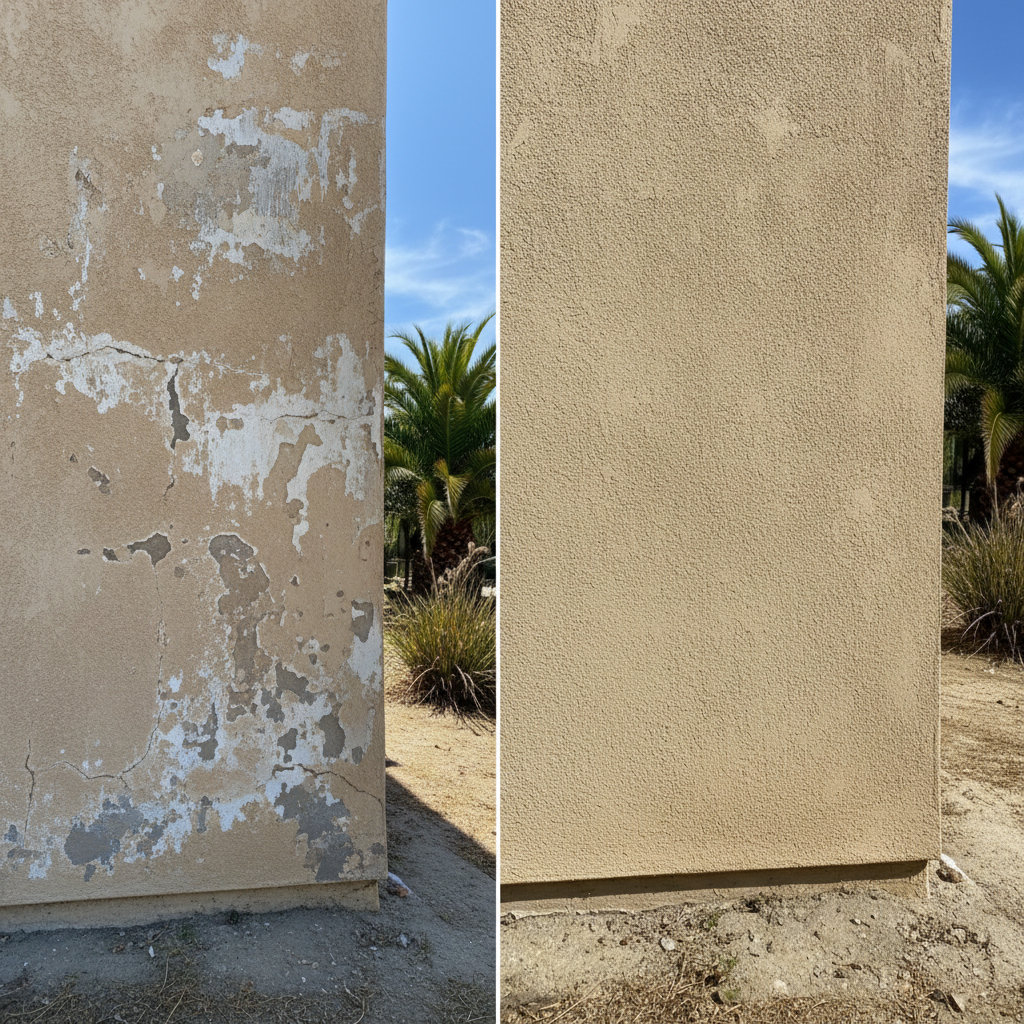
Alright, let's talk commercial stucco. You've got a building in Long Beach, maybe it's a storefront on 2nd Street, or an office complex near the airport, and you're thinking about its exterior. When it comes to stucco, there are two big players you'll hear about: traditional three-coat stucco, which I often call 'hard coat,' and EIFS, which stands for Exterior Insulation and Finish System. They both look like stucco, but they're built totally different. Knowing the ins and outs of each can save you a lot of headaches and money down the line.
Traditional Hard Coat Stucco: The Tried and True
This is what most people picture when they think of stucco. It's been around for ages, and for good reason. It's a robust, multi-layer system that typically involves a scratch coat, a brown coat, and then the finish coat. All of this goes over a lath and a weather-resistive barrier.
- Durability: Hard coat stucco is tough. I mean really tough. It's basically a concrete-like shell on your building. It can take a beating from the elements, and it's pretty resistant to impact. If you've got a high-traffic area or just want something that feels solid, this is it.
- Cost: Generally, hard coat stucco is going to be less expensive upfront than EIFS. The materials are common, and while it's labor-intensive, the process is well-established.
- Maintenance: It's pretty low maintenance. You'll want to keep it clean, and if you get a crack, you'll need to address it to prevent water intrusion. But overall, it holds up well.
- Appearance: You get that classic, solid stucco look. You can choose from a huge range of colors and textures, from smooth to sand finish. It's got a timeless appeal.
- Water Management: This is key. Hard coat stucco is designed to shed water, but it's not a perfect barrier. It relies on that weather-resistive barrier behind it to handle any water that gets through. Proper flashing and weep screeds are absolutely critical for drainage.
EIFS: The Modern Insulated System
EIFS is a bit newer to the scene, and it's a different animal. Instead of a thick cementitious base, it uses a layer of rigid insulation board, usually expanded polystyrene (EPS), which is then covered with a base coat that has a reinforcing mesh embedded in it, and finally, a finish coat. There are two main types: barrier EIFS and drainage EIFS. In our climate, especially with the occasional heavy rains we get in Long Beach, drainage EIFS is the only way to go. Barrier EIFS has a bad reputation from early installations where water got trapped behind it, causing major problems.
- Durability: EIFS is flexible, which means it's less prone to cracking from building movement or minor impacts than hard coat. However, it's softer. A sharp impact can dent or puncture it, though repairs are usually straightforward.
- Cost: Expect EIFS to be more expensive upfront. The materials are specialized, and the installation requires a very specific skill set.
- Maintenance: Similar to hard coat, you'll want to keep it clean. If it gets punctured, you need to repair it quickly to maintain its weather integrity.
- Appearance: EIFS offers incredible design flexibility. You can create all sorts of architectural details, curves, and cornices that are much harder and more expensive to do with traditional stucco. It can look incredibly smooth and uniform.
- Insulation: This is EIFS's big selling point. That foam board provides excellent insulation, which can lead to significant energy savings for your commercial property. In a place like Long Beach where we run AC a lot in the summer, that can really add up.
- Water Management: With drainage EIFS, there's a drainage plane behind the insulation that allows any water that gets past the finish coat to drain harmlessly away. This is a huge improvement over older barrier systems.
My Recommendation for Long Beach Commercial Properties
Okay, so which one should you pick? For most commercial properties in Long Beach, especially those where you're looking for long-term value, energy efficiency, and a modern aesthetic, I lean towards drainage EIFS. The insulation benefits are hard to ignore, especially with energy costs always on the rise. We've got buildings here, particularly some of the newer developments in areas like Bixby Knolls, that really benefit from the thermal performance EIFS offers.
That said, if you're on a tighter budget, or if you're restoring an older building and want to maintain its original character and robust feel, traditional hard coat stucco is still a fantastic option. It's proven, and when installed correctly by a crew that knows what they're doing (like us at Synergy Stucco Long Beach), it will last for decades.
The biggest takeaway here is that proper installation is non-negotiable for both systems. With either hard coat or EIFS, if the flashing isn't right, if the weather barrier is compromised, or if the system isn't detailed correctly around windows and doors, you're going to have problems. Don't cut corners there. Always go with a contractor who understands the specific requirements of each system and has a solid track record.